
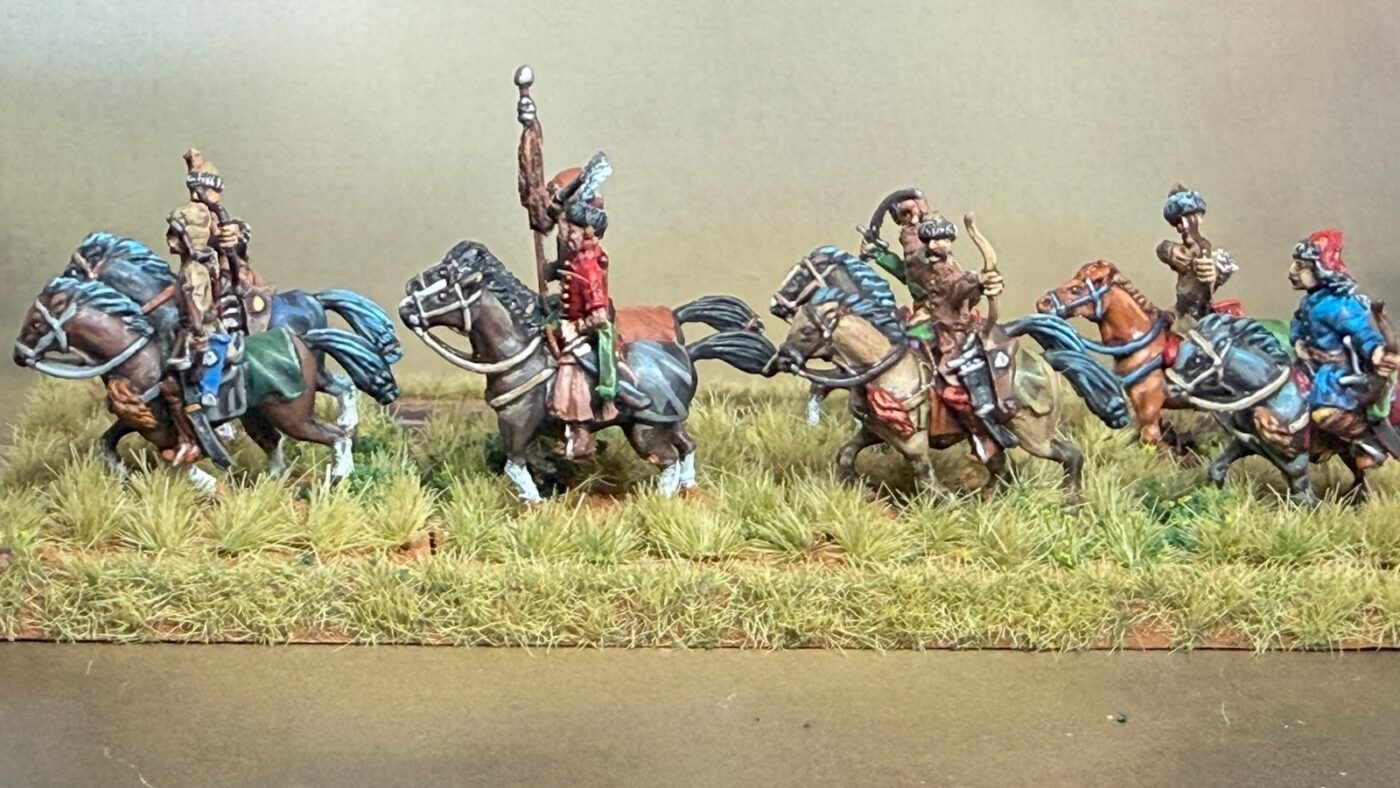
If you ever bought painted miniatures you know, that a basing and a painting style rarely fit together nicely. I recently updated some miniatures I bought from Bombel to fit into my collection. Read what I did with the minis in order to make them fit.
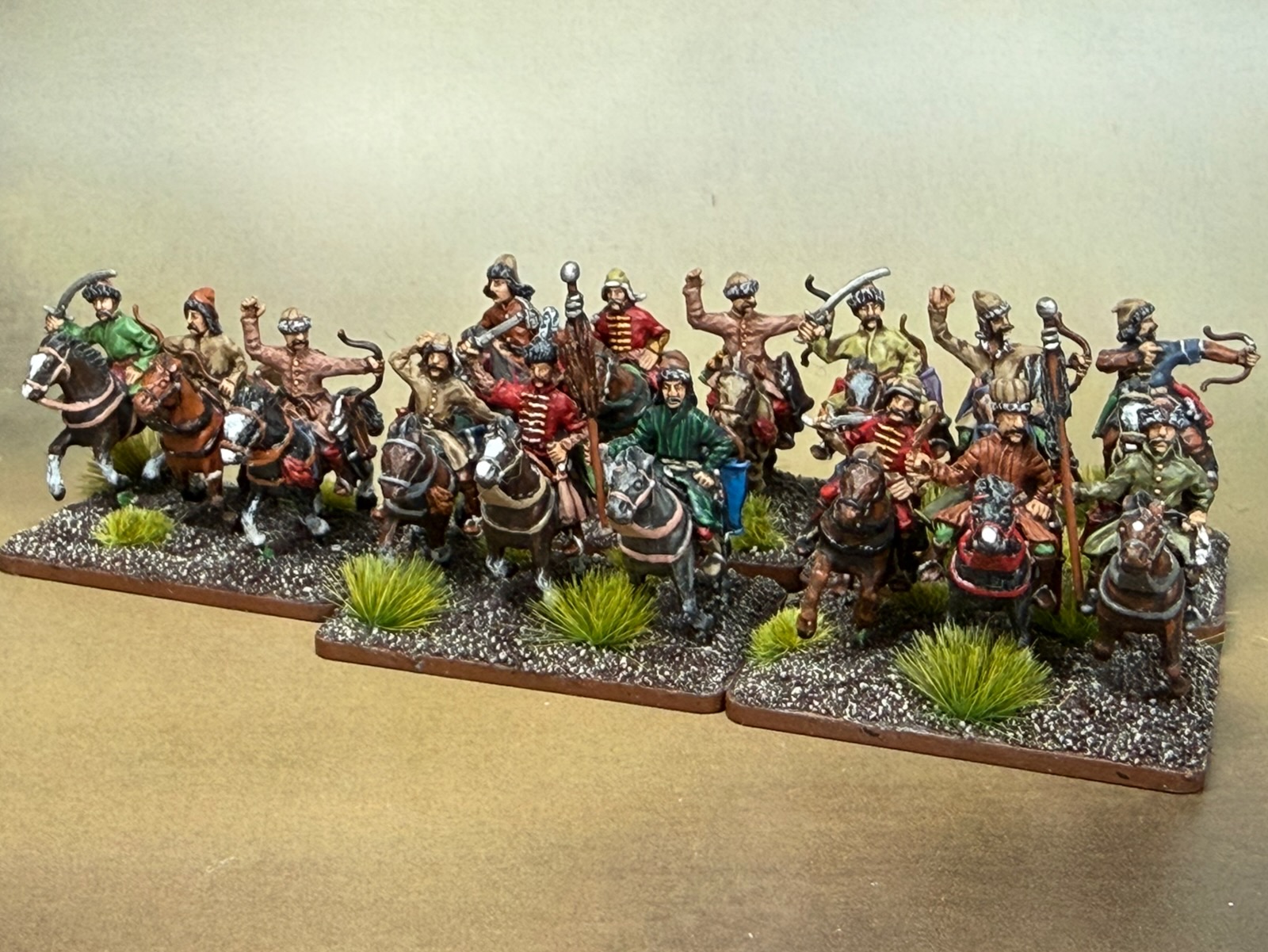
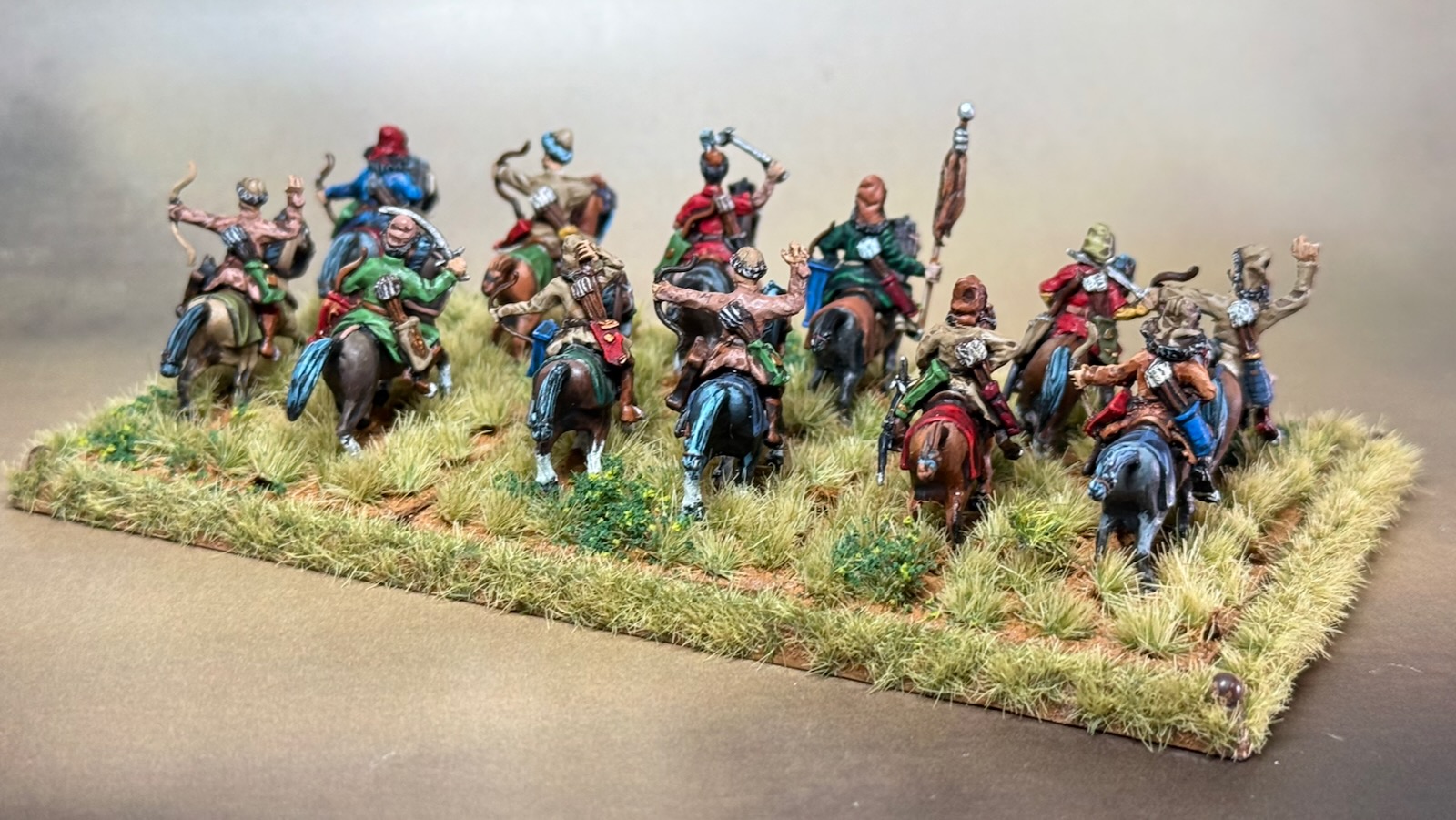
These are the miniatures painted by Bombel, as they were when I bought them. It’s a very nice, solid paint job that shows a practised hand and plenty of experience with 15mm. I like that he chose quite a wide range of colours, since Tartars are often painted in dull, brownish khaki tones. I was less convinced by the basing: the earth tone looked very artificial to me, and the bright green grass tufts seemed randomly scattered. The models were also still based for the first edition rules, and I wanted to rebase them with two miniatures per base, which is now the standard in By Fire and Sword 2nd edition. Still, I was lucky to get my hands on such nice models.
Rebasing
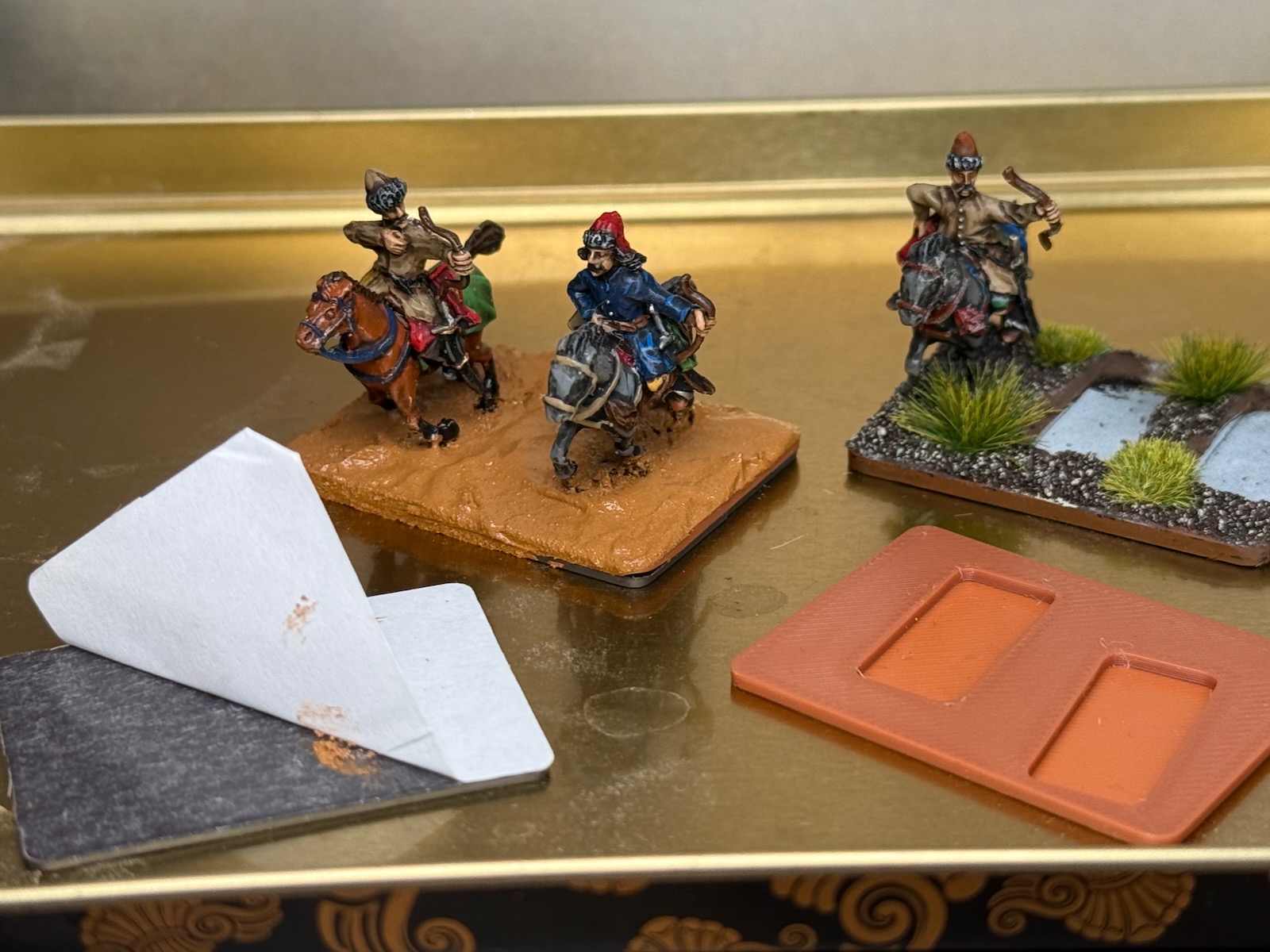
I store my miniatures magnetised, so I use the By Fire and Sword magnetic stickers from Safe and Sound. To keep the BFaS bases as thin as possible, I 3D-print bases with recesses for the horses’ own bases. I then finish the base with Vallejo Brown Earth texture paste. The whole process takes only a few minutes per base.
Grass tufts
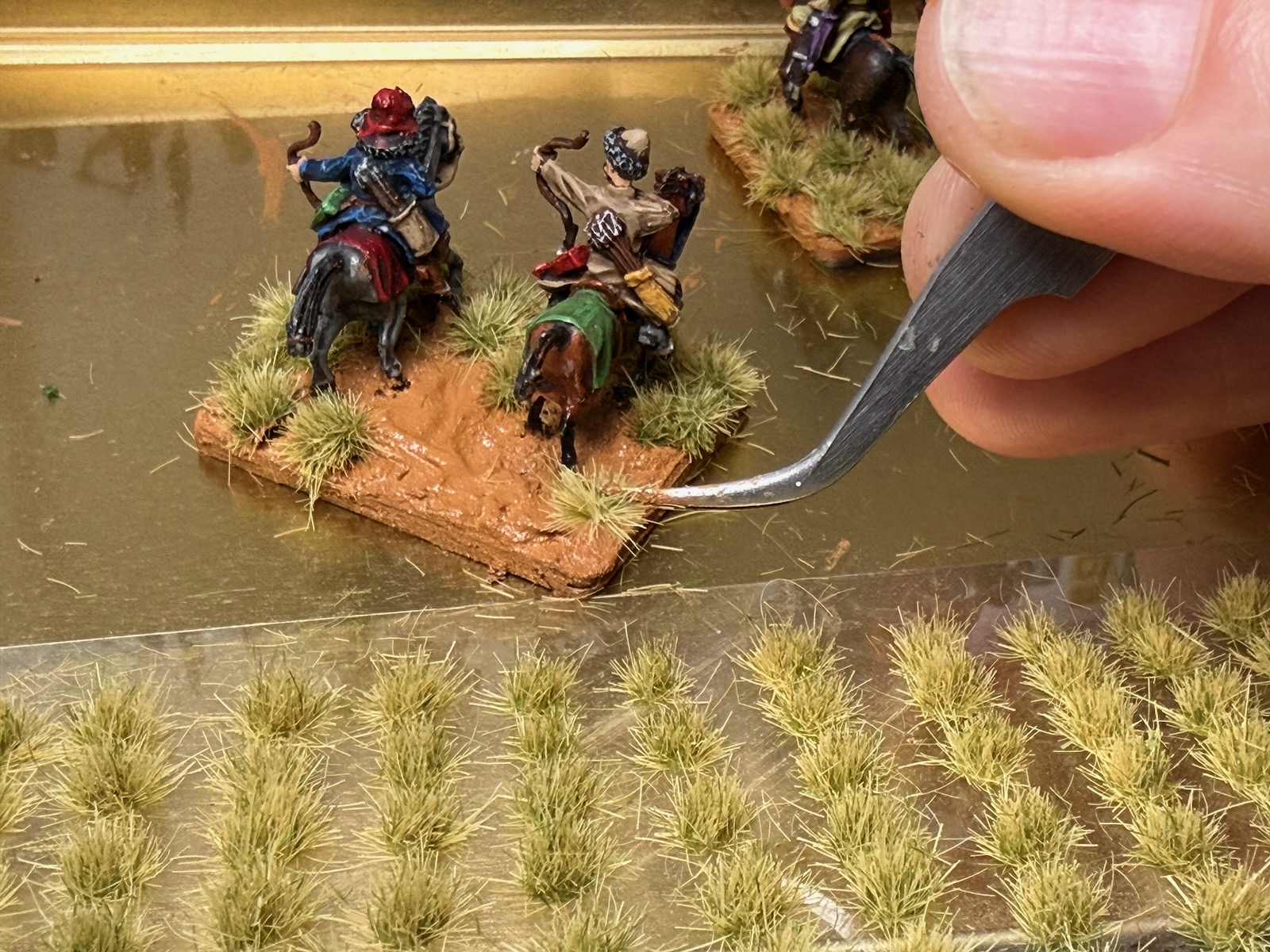
Grass tufts are the next step. I press them directly into the wet texture paste, which bonds them firmly as it dries, so the tufts rarely fall off. I make the tufts myself with a static grass applicator box, using two lengths of grass in a light and a dark shade. Unfortunately, my favourite brand of static grass is currently unavailable, so I’m using what I have until I find a good source of 4mm yellow or straw-coloured grass.
Adding Highlights, smoothening top surfaces
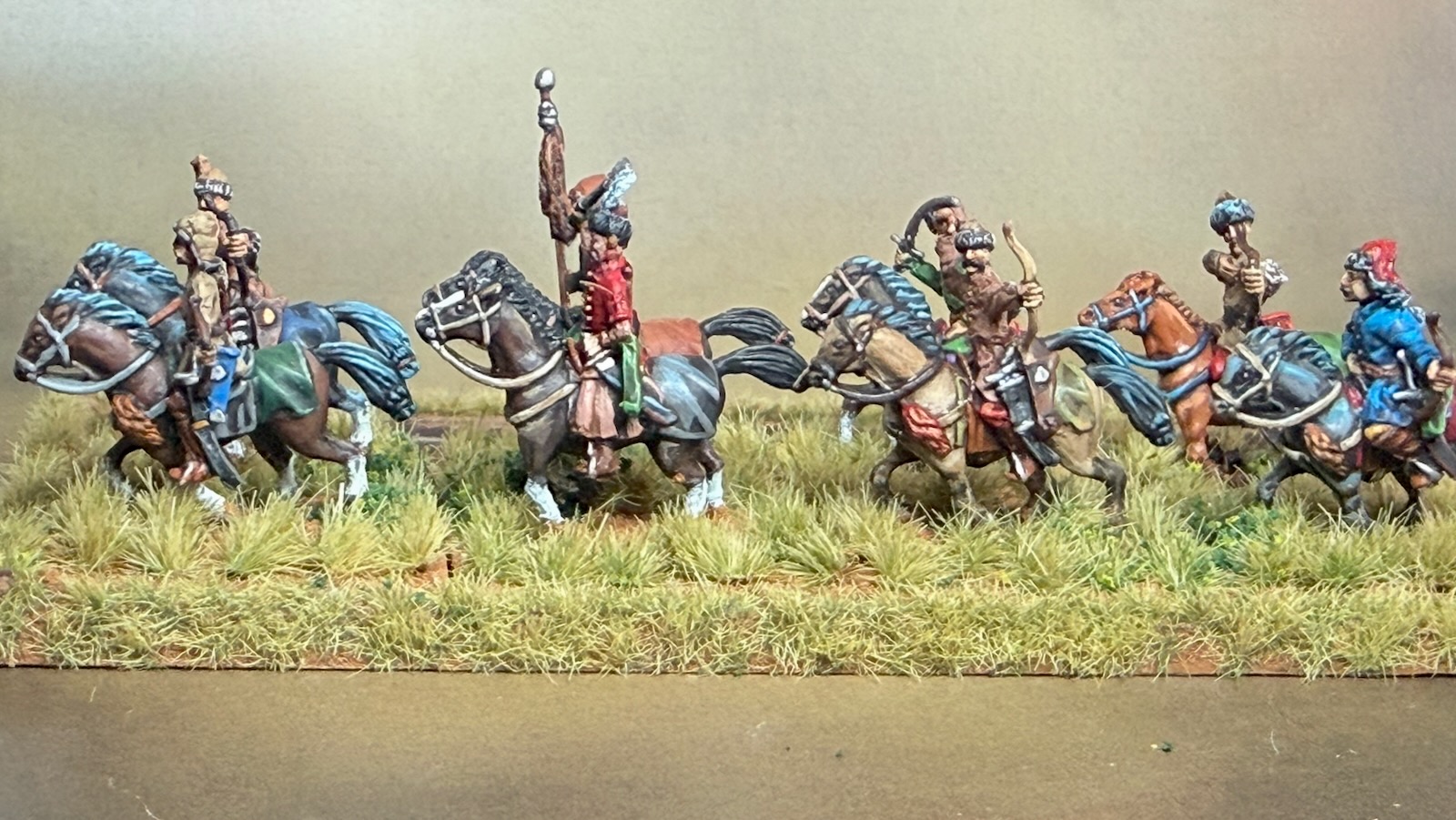
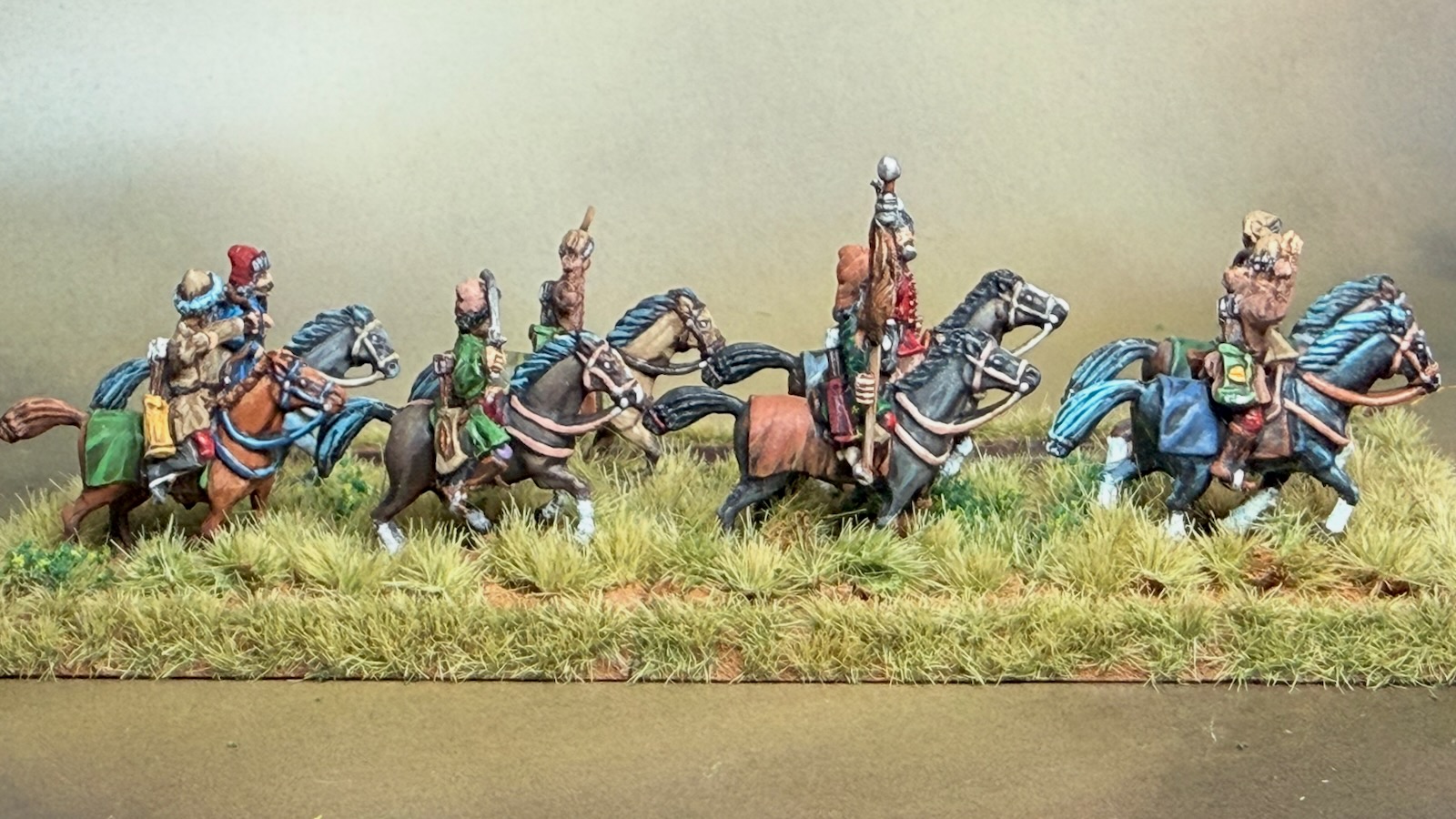
After basing, I added some finishing touches to the models, which I consider very important. I like to highlight black areas with blue-grey and then light blue-grey to bring out details such as the structure of the horses’ manes. I also changed some horse colours: I repainted a few isabellas as duns, since I doubt a Tartar army would have had access to such prized horses.
Where a highlight was too stark, I repainted the top layer, for example on the braiding of the standard-bearer’s horse. I also toned down all the white areas on the horses’ coats and added a highlight to the bridles. Each horse received two additional highlight layers. Since I was mostly just adding a final highlight on top of an already well-painted model, the work went quickly.
Finally, I coated the miniatures with Pro Acryl Matte Varnish, applied with a brush. I’m still very grateful to Lucas and Martin for recommending brushed-on varnish. Both of them use AK Interactive, which is also good; with AK, I use a mix of their Matte and Ultra Matte varnishes. To me, well-varnished models simply look better: with fewer reflections, the paint job is much easier to appreciate.
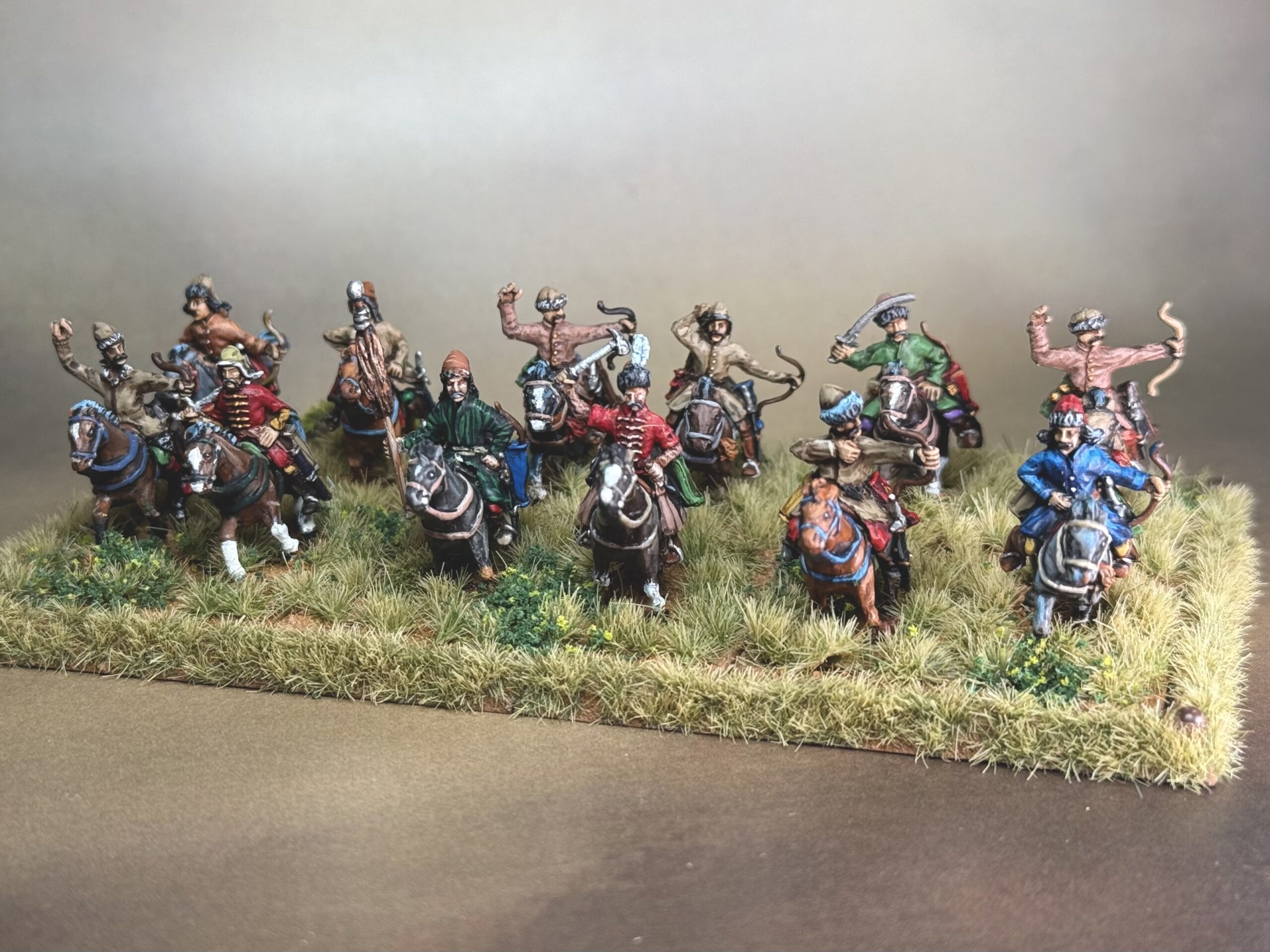
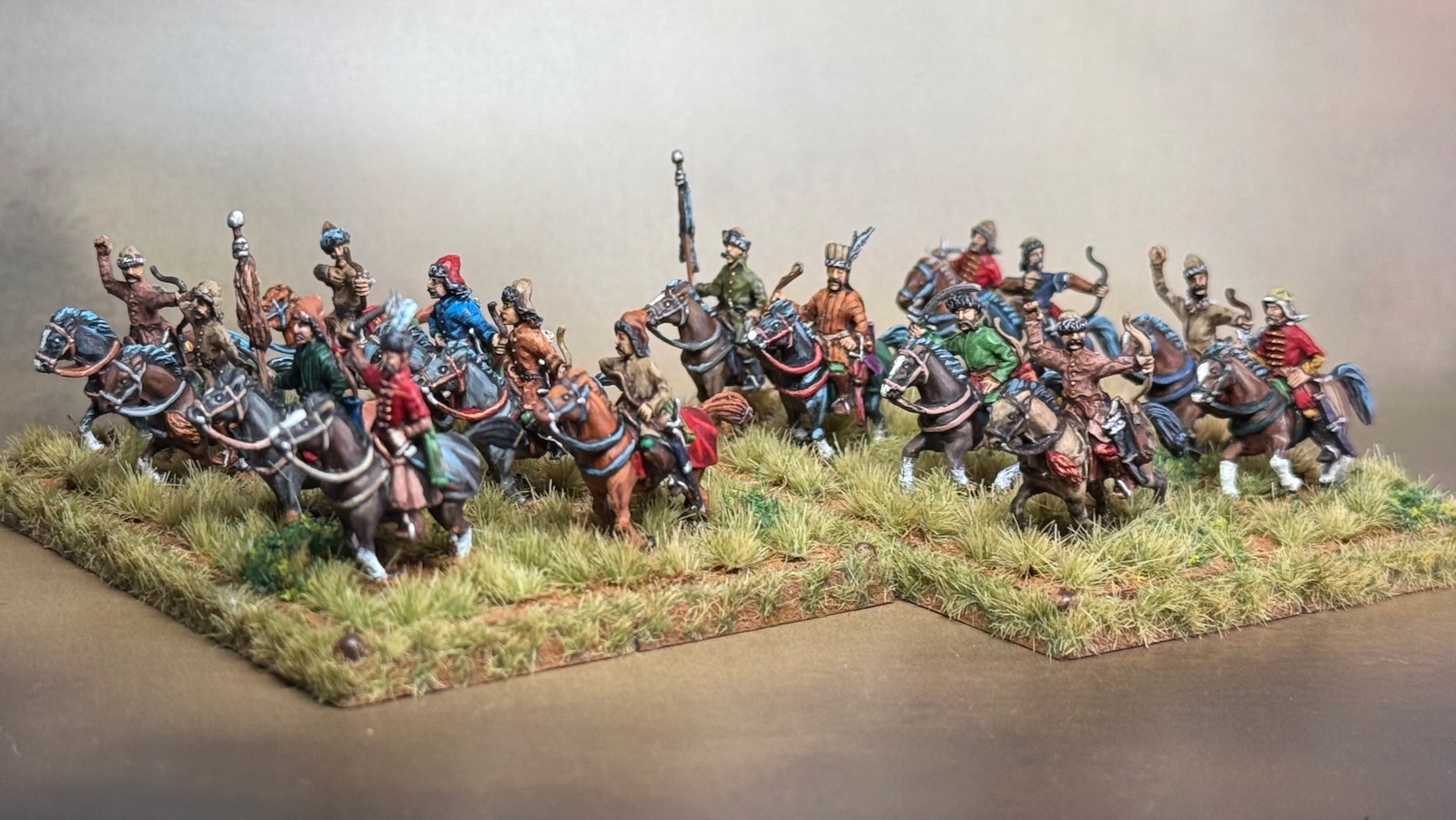
Conclusion
If the starting point is a solid paint job, putting some effort into bought or older miniatures in your collection can really pay off. It opens up games and armies you would never have painted entirely by yourself, and it speeds things up considerably. I strongly disagree with people who refuse to rebase because they think it’s too much work. For me, it’s absolutely manageable, and the new light horse basing in particular makes it well worth updating your collection.